Care For Yourself and Your Loved Ones

Who will make healthcare decisions for you when you cannot make them for yourself?”
“Who will pay your bills and manage your money if you cannot do that for yourself?”
“Who will apply for public benefits such as Medicaid for you if you cannot do that for yourself?”

legal documents

Be aware that people who do not have legal documents in place when they become ill suffer tragic consequences.

During my years of practice as a Registered Nurse, I was required to provide CPR and other life saving measures to people which only served to prolong their pain and the natural process of dying. Things such as ventilators for breathing and tube feedings. When no documents are in place, the health care provider has no choice but to exercise
all efforts to preserve life.

Family members of the ill person are unequipped and confused about what is the right thing to do when their loved one can no longer verbalize their own wishes. I have sat with individuals who were required to make decisions who still suffer guilt, anxiety, and a deep sense of remorse because they are not certain that they made the right decisions
for their loved ones in the end or worse, they were not able to make decisions for their loved one because they did not have the legal authority to do so.

Financial difficulties which can be catastrophic arise when patients in need of public benefits such as Medicaid have not appointed a Power of Attorney to handle these matters for them. Sometimes life-long family hurts and feuds result when adult children or spouses do not agree on the course of care for a parent and there is no document
giving authority to any of them.

Estate Planning is thought of as planning for your assets after death. Key to this planning is having legal documents prepared that appoint the person who will assist you while you are still alive. I cannot stress this enough. All too often people who neglect this aspect of their planning end up requiring Court appointed Guardians and Court
proceedings to manage their care. Terri Schiavo is just one example of many.

Health Care Power of Attorney: Appoint the Person most able to make decisions in accordance with your own wishes.

Advance Directives: Give the Health Care Power of Attorney written directions as to your wishes.

Durable Power of Attorney: Appoint the Person and give them the authority to handle your financial affairs as needed while you are still alive but unable to do this yourself. This includes long-term care provisions required for Medicaid and other public benefit applications.

Do not leave these matters to chance. If you do, you and your loved ones will pay the price of the consequences.

Diana Mangsen focuses her practice as an elder law attorney in Clearwater, Palm Harbor, Largo, Dunedin and the Tampa Bay area.

For more information, visit our website at
https://www.mangsenlaw.com/
or call (727) 888-6282.

Probate

Probate is a court-supervised process for gathering the assets of a deceased person (decedent), paying the decedent’s debts, and distributing the decedent’s assets to his or her beneficiaries. The Florida Probate Code is found in Chapters 731 through 735 of the Florida Statutes, and the rules governing Florida probate proceedings are found in the Florida Probate Rules, Part I and Part II (Rules 5.010-5.530).

Probate sign, stack of papers and gavel.

There are two types of probate administration under Florida law: formal administration and summary administration. Probate assets are those assets that the decedent owned in his or her sole name at death, or that were owned by the decedent and one or more co-owners and lacked a provision for automatic succession of ownership at death.

Probate assets include, but are not limited to, the following:

•  A bank account or investment account in the sole name of a decedent.
•  A life insurance policy, annuity contract, or individual retirement account without a named beneficiary. Sometimes the named beneficiary has predeceased the owner of the asset.
•  Real estate titled in the sole name of the decedent, or in the name of the decedent and another person as tenants in common.

Probate is necessary to pass ownership of the decedent’s probate assets to the decedent’s beneficiaries. Probate is also necessary to complete the decedent’s financial affairs after his or her death.

It is ideal to have a valid Will when probate is required. Probate proceedings are filed with the clerk of the circuit court, usually in the county in which the decedent lived at the time of his or her death. A filing fee is required. The clerk assigns a case number and maintains an ongoing record of all papers filed for the administration of the decedent’s probate estate. Creditors file claims in the case. Creditors with valid claims get paid from non-exempt probate property before beneficiaries receive an inheritance.

Diana Mangsen focuses her practice as an elder law attorney in Clearwater, Palm Harbor, Largo, Dunedin and the Tampa Bay area.

For more information, visit our website at
https://www.mangsenlaw.com/
or call (727) 888-6282.

Florida Long Term Care Medicaid

Florida Long Term Care Medicaid can pay for services at home, in Assisted Living Facilities, Memory Care and in Skilled Nursing Facilities.

To qualify for Florida Long Term Care Medicaid there are income and asset eligibility requirements. The following are examples and are not the entirety of options available.

Mature senior couple

Income

The current monthly gross income for an Individual for Medicaid eligibility is: $2901.00/gross income per month. This amount is subject to change.

For Married couples in which only one of them is applying for Medicaid the non-applicant spouse’s income does not count.

If someone is over the Income Eligibility cap for Medicaid, then Medicaid allows the use of a Qualifying Medicaid Income Trust or a Pooled Trust, and eligibility can be reached that way.

Assets

There are some assets that are exempt from the Medicaid asset count. Homestead is Exempt. One Automobile is Exempt. IRAs, Roth, Retirement accounts are Exempt as long as regular distributions are being made. This requirement is met by the Required Minimum Distributions (RMDs). If RMDs are not yet required, then small monthly distributions can be initiated. Pre-paid Funeral/Burial/Cremation is Exempt, if the contract is made Irrevocable. For Married couples $157,920.00 liquid
assets are exempt.

Examples of Assets that are not exempt are cash in savings and checking accounts, investment accounts, CD’s, Life Insurance policies with cash/surrender value.

Married couples can transfer assets to the non-applicant spouse and use spousal refusal method for exemption. Some other examples for married and single individuals for Nonexempt Asset protection are personal services contracts, loans, homestead repairs, homestead mortgage or Line or Credit pay off or pay down, Purchase Irrevocable Funeral/Burial/Cremation, Pay off applicant’s debt.

These are just some examples. Every case is different and should be carefully considered. There are many factors that weigh into the decisions about the best way to provide for the high cost of Long-Term Care of an elder. Be sure to consult with an Elder Law Attorney.

Diana Mangsen focuses her practice as an elder law attorney in Clearwater, Palm Harbor, Largo, Dunedin and the Tampa Bay area.

For more information, visit our website at
https://www.mangsenlaw.com/
or call (727) 888-6282.

Planning for your Final Arrangements and for Your Remains.

I. Include instructions in your will

Your final arrangements and the directions concerning your final remains are best
handled with written instructions in a Last Will and Testament. If you don’t leave
instructions, the decision falls to your next of kin, in legal hierarchy contained in Florida
Statutes 497.005(43). Written instructions contained in your Will are legally binding.

Last Will and testament document with pen

Specify your preferences for burial, cremation, or other arrangements in your Last Will
and Testament.

II. Pre-plan and pre-pay

A pre-paid funeral plan can outline your specific choices, sparing your family from
having to make difficult decisions while they are grieving. Pre-paying for a funeral plan
can lock in the cost and save your family from incurring those expenses at the time of
your passing.

III. Whole-Body Donation (in case you were wondering)

In Florida, the donation of a body to science is overseen by the Anatomical Board of the
State of Florida, which allocates donors to medical schools and programs within the
state.

This state entity coordinates and distributes donated human remains to public and
private colleges, universities, and other facilities for anatomical education and medical
research. Some of the universities in Florida operating under this board are the
University of Florida College of Medicine, University of Central Florida College of
Medicine, University of Miami Miller School of Medicine, University of South Florida
Morsani College of Medicine, and Florida State University College of Medicine. Visit the
board’s website for more information: Website: anatbd.acb.med.ufl.edu

Diana Mangsen focuses her practice as an elder law attorney in Clearwater, Palm Harbor, Largo, Dunedin and the Tampa Bay area.

For more information, visit our website at
https://www.mangsenlaw.com/
or call (727) 888-6282.


Hurricane season is here through November 30

There are many reminders for supplies during Hurricane season such as: keep a Full tank of gasoline or a fully charged electric vehicle, bottled water, flashlights and batteries.
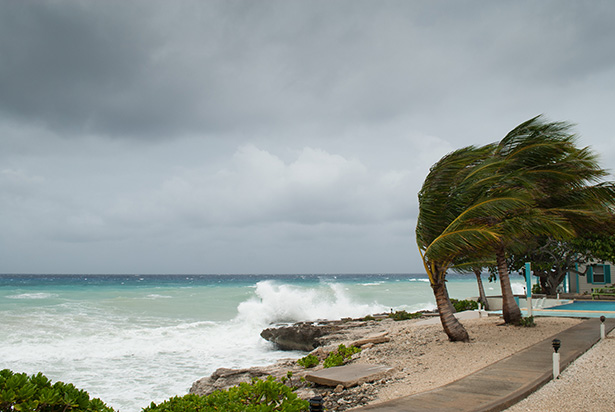
A hurricane is about to batter this caribbean beach hut.

Consider ways to keep your important documents.

Consider keeping Estate Plan Original documents such as Power of Attorney documents, Trust documents and Last Will and Testaments together in a waterproof, fireproof container in your home. Kept in your home, it is handy for the occasions when the documents are needed, and it should be a size that makes it easy to pick it up and take it with you if you must evacuate.

Consider keeping PDFs of these important documents on your phone and on your computer. That way no matter where you are, you can access those PDFs and share them with family members, medical providers or financial institutions.

Consider keeping PDFs of all your insurance and flood policies on your phone and on your computer also. You might consider keeping the hard copy summary pages of your insurance policies in your waterproof, fireproof container with your estate plan documents.

Take photos of your property, inside and out before the storm hits and email the photos to yourself to get the timestamp. Some insurance companies are very good, and others push back hard on these claims.

Maintain a list of your digital assets including passwords so that you or a person named to act on your behalf can access your accounts. Would you or anyone else be able to recover your Bitcoin wallet if your cell phone and computer were unusable? Put the list in your waterproof, fireproof container.

Put your passport, social security card and birth certificate, and military discharge paperwork in a waterproof/fireproof container. Make sure that you can access it easily for those occasions when you need the documents and that you can take it with you easily in the event of an evacuation.

Let’s prepare for the worst and hope for the best!

Diana Mangsen focuses her practice as an elder law attorney in Clearwater, Palm Harbor, Largo, Dunedin and the Tampa Bay area.

For more information, visit our website at
https://www.mangsenlaw.com/
or call (727) 888-6282.

Florida Long Term Care Medicaid Programs

1. Institutional Care Program (ICP)
2. Home & Community Based Services (HCBS)

The application for Florida Institutional Care Medicaid Program (ICP) is filed when a person is in a “Skilled Nursing Facility or Healthcare & Rehabilitation Center”. This is a facility that provides rehabilitation services after hospitalization and long-term care for those who can no longer live in their home or in a community setting.

elderly couple

The application for Florida Home & Community Based Services (HCBS) Medicaid Program is filed when a person is living in the community. That can mean they live in their own home, they may live in someone else’s home, or perhaps they live in an Assisted Living Facility (ALF).

There are 3 eligibility requirements for either of these Medicaid programs: 1. Income; 2. Asset; and 3. Level of care Needed. When a person is over income or over asset, an attorney can assist them with income and/or asset protection so they can meet the Medicaid eligibility requirements and receive the services of these programs.

Skilled nursing/long-term care facility costs range from $9,000.00 to $15,000.00 per month. Generally, the person receiving Medicaid ICP benefits will pay their monthly income to the long-term care facility and Medicaid ICP will pay the balance of the facility invoice every month as long as the person is asset eligible and requires the level of care.

Assisted living facility costs range from $3500.00 to $7000.00 per month. Generally, the person receiving Medicaid HCBS benefits pays for the room and board at the facility from their income and the Medicaid HCBS program pays the level of care amount which is between $1300.00-$1800.00 per month in addition to covering a myriad of other medical expenses.

For individuals who wish to remain in their homes, Medicaid HCBS pays for the Suncoast Pace Program which provides home services and day programs for individuals who are income, asset and level of care eligible. The same eligibility criteria applies and the goal of the Suncoast Pace program is to help the applicant remain
in their home for as long as possible.

Please do not rely on legal advice regarding these income and asset matters from friends or other well-meaning individuals. The legal rules are complex and ever-changing. The Florida Supreme Court ruled that only attorneys are permitted to give legal advice on Medicaid planning. So many people have been misguided
and suffered great harm because of non-attorneys who give legal advice on Medicaid income and asset issues. Please do not rely on the legal advice given to you by non-attorneys.

Diana Mangsen focuses her practice as an elder law attorney in Clearwater, Palm Harbor, Largo, Dunedin and the Tampa Bay area.

For more information, visit our website at
https://www.mangsenlaw.com/
or call (727) 888-6282.
Florida Intestacy Statute

Being married does not “automatically” mean that probate won’t be required and it does not mean that your spouse will inherit your assets.

Last Will and testament document with pen

Assets titled to a decedent, must be re-titled after death with or without a Last Will &
Testament. This can include bank accounts, automobiles, homes, real estate, boats, investment accounts, retirement accounts and life insurance policies without named beneficiaries, or retirement accounts and life insurance policies with named beneficiaries who predeceased.

A Last Will & Testament will be filed with the court and a probate case will be initiated for the re-titling of the assets in accordance with instructions in a valid will created by the decedent.

If there is no Last Will & Testament, the Florida Intestacy Statute 732.101 – 732.111
prescribes who will inherit the assets. 732.102(3) indicates that if the decedent has lineal descendants that are not descendants of the surviving spouse, then the surviving spouse’s share of the intestate estate is one-half. If the decedent and the surviving spouse have descendants together and the surviving spouse has descendants that are not descendants of the decedent, the surviving spouse’s share of the intestate estate is one-half.

732.102 Spouse’s share of intestate estate. —The intestate share of the surviving
spouse is:
(1) If there is no surviving descendant of the decedent, the entire intestate estate.
(2) If the decedent is survived by one or more descendants, all of whom are also
descendants of the surviving spouse, and the surviving spouse has no other descendant, the entire intestate estate.
(3) If there are one or more surviving descendants of the decedent who are not lineal
descendants of the surviving spouse, one-half of the intestate estate.
(4) If there are one or more surviving descendants of the decedent, all of whom are also
descendants of the surviving spouse, and the surviving spouse has one or more descendants who are not descendants of the decedent, one-half of the intestate estate.
732.401 Descent of homestead. —
(1) If not devised as authorized by law and the constitution, the homestead shall descend in the same manner as other intestate property; but if the decedent is survived by a spouse and one or more descendants, the surviving spouse shall take a life estate in the homestead, with a vested
remainder to the descendants in being at the time of the decedent’s death per stirpes.
(2) In lieu of a life estate under subsection (1), the surviving spouse may elect to take an undivided one-half interest in the homestead as a tenant in common, with the remaining undivided one-half interest vesting in the decedent’s descendants in being at the time of the decedent’s death, per stirpes.

Diana Mangsen focuses her practice as an elder law attorney in Clearwater, Palm Harbor, Largo, Dunedin and the Tampa Bay area.

For more information, visit our website at
https://www.mangsenlaw.com/
or call (727) 888-6282.
Independence and Freedom

Least restrictive manner means the approach to providing services or resources that allows an elder the maximum INDEPENDENCE AND FREEDOM from intrusion consistent with the elder’s needs by requiring that the least drastic method of intervention be used when intervention is necessary and that only those services or resources that are reasonably necessary to protect the elder are provided.

Nurses assisting elderly people at retirement home

Florida Medicaid coverage is NOT just for Nursing Home Care.

AT HOME or in an Assisted Living Facility: Florida Medicaid assists functionally impaired elderly persons in living dignified and reasonably independent lives in their own homes or in the homes of relatives or caregivers through the development, expansion, reorganization, and coordination of various community-based services. Functionally impaired elderly persons age 60 and older may be assured the least restrictive environment suitable to their needs.

Florida Medicaid covers community care services whose primary purpose is the prevention of unnecessary institutionalization of functionally impaired elderly persons. This is done through the provision of community-based core services.

Suncoast PACE (Program of All-Inclusive Care for the Elderly).

Suncoast PACE aims to fully support and care for Pinellas County seniors 55+ achieve a healthy quality of life, stay active and socially connected and live safely and independently in their homes and in the community. Additionally, they provide education, guidance and relief for the caregivers.

The Suncoast PACE services include primary care, physical, occupational, and speech therapies, skilled care, social and emotional support and day care at our Suncoast PACE Day Center and Medical Clinic; in-home care and support; and transportation to and from Suncoast PACE or other PACE-approved specialists.

For more information, call PACE at (727) 289-0062, (866) 458-2933 (toll free) or
(800) 955-8771 (hearing impaired).

If you are over income or over asset eligibility for Florida Medicaid, call my office and I will provide an analysis and consultation on your situation and your ability to obtain Florida Medicaid because there are legal avenues with which these eligibility issues can be addressed.

Diana Mangsen focuses her practice as an elder law attorney in Clearwater, Palm Harbor, Largo, Dunedin and the Tampa Bay area.

For more information, visit our website at
https://www.mangsenlaw.com/
or call (727) 888-6282.

Scams and Elder Orphans

The FBI reports notable increases in fraud perpetrated against older Americans.
Common fraudulent scams reported include tech support scams, confidence and
romance scams, investment scams, and government impersonation scams. I encourage you to watch the YouTube video of William Webster, former director of the FBI and CIA as well as a former federal judge, reporting that he had been the target of a lottery scam in 2022. See the video at:
https://www.fbi.gov/video-repository/webster-scam-final-021919.mp4/view

Concerned elderly woman holding credit card and telephone in her apartment living room.

“Elder Orphans” are persons of advanced age who don’t have anyone who they can
name as Power of Attorney or Successor Trustee. The elder orphan is considered
particularly vulnerable to confidence scams, especially if that elder does not maintain an
active social life. The scammer builds a relationship with the older individual over time,
slowly gaining their trust. Once trust is established, the scammer exploits the
relationship in a financial manner.

Protect yourself against scams with Advance Planning

1. Create a Medical Power of Attorney with HIPPA releases prior to advanced age or
diminished capacity designating a trusted contact OR a professional fiduciary and
have it made effective immediately so that you have advocacy from someone you
trust during your time of illness when you most need it. Be sure the document
accurately describes your directives for future medical care.

2. Create a Durable Power of Attorney, prior to advanced age or diminished capacity,
designating a trusted contact OR a professional fiduciary.

3. Transfer assets to a living trust that names a trusted person or a professional
fiduciary as successor trustee or co-trustee.

Diana Mangsen focuses her practice as an elder law attorney in Clearwater, Palm Harbor, Largo, Dunedin and the Tampa Bay area.

For more information, visit our website at
https://www.mangsenlaw.com/
or call (727) 888-6282.
Powers of Attorney

Power of Attorney (POA) is a legal document delegating authority.

Powers of Attorney can be limited or broad. A limited POA can be executed to grant the authority to sell a car or a home or some other specific act. A general POA can be executed to grant Broad authority to act in most aspects of one’s financial matters. A Medical or Healthcare POA typically grants authority to act in all aspects of medical and healthcare.

power of attorney paper

The “Durable” power of attorney indicates that the authority granted in the document survives the incapacity of the principal. This means that if the person granting authority becomes incapacitated, the document is still valid, and the agent retains the ability to act on behalf of the principal. If the power of attorney is “non durable”, the authority ends when the principal becomes incapacitated.

In Florida the POA is a “fiduciary” under the law. A fiduciary relationship is one of trust. If the agent violates this trust, the law may punish the agent both civilly and criminally.

A valid durable POA executed before the principal became incapacitated avoids guardianship proceedings.

POAs created in other states are subject to Florida’s Power of Attorney Act and other state laws. POA created by preprinted forms typically fail to provide the protection or authority desired.

Authority granted in a POA ends when the principal dies or when the authority is otherwise terminated by the terms of the document or an order of the court. Authority ends with revocation by principal and
resignation by agent.

REVOCATION

The Power of Attorney can be revoked at any time by the principal. The revocation must be in writing and is required to be executed with the same formalities as the original power of attorney document and the agent
must receive notice. 709.2110 Florida Statutes.

RESIGNATION

A person named as Power of Attorney may resign at any time. The Resignation must be in writing and Notice must be given to the principal. 709.2118 Florida Statutes.

Diana Mangsen focuses her practice as an elder law attorney in Clearwater, Palm Harbor, Largo, Dunedin and the Tampa Bay area.

For more information, visit our website at
https://www.mangsenlaw.com/
or call (727) 888-6282.